
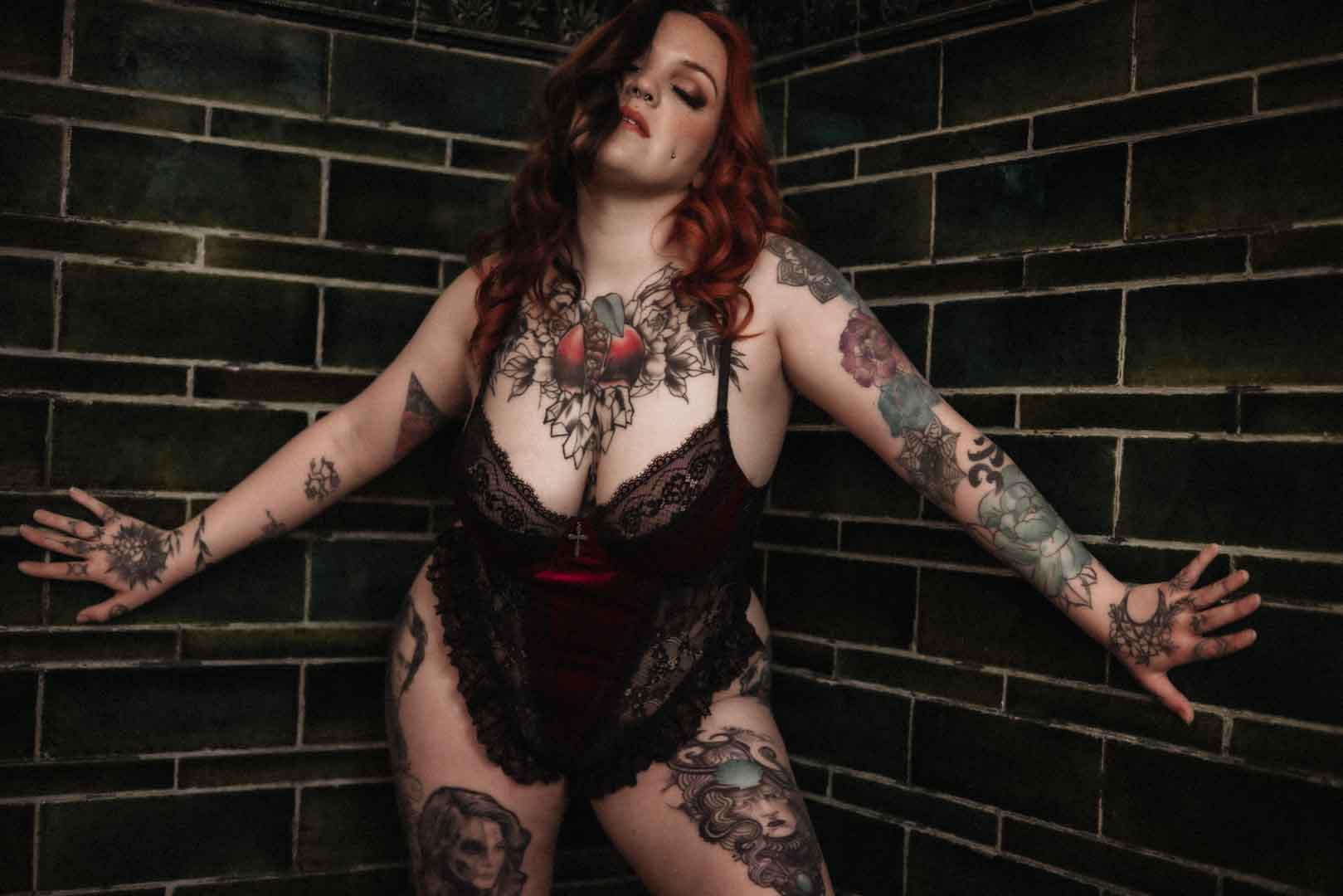
If you’re trying to figure out how to pose clients naturally and not just copy poses, I break down my full approach to photography education here →
If you’ve ever searched for a boudoir posing guide…
You’ve probably seen the same thing over and over again.
“25 poses to try”
“31 boudoir posing ideas”
“10 poses for every client”
And at first, it feels helpful.
You save them.
You study them.
You go into your shoot thinking:
“Okay… I’ve got this.”
And then you start shooting…
…and something feels off.
The poses are technically right.
The angles are fine.
But the images still feel:
- stiff
- forced
- disconnected
And you can’t quite explain why.
The problem with most boudoir posing advice
Most posing guides teach you what something should look like.
But they don’t teach you:
how to actually get there
So you end up trying to recreate a final result…
without understanding the process behind it.
That’s why it feels like guessing.
That’s why it breaks the moment your client moves differently.
Or feels nervous.
Or doesn’t look like the model in the example.
Why boudoir posing often looks stiff
Let’s be honest.
Boudoir is one of the hardest genres to pose.
Because your client is:
- exposed
- aware of their body
- often nervous
- unsure what to do
And most posing advice adds pressure instead of removing it.
“Arch more.”
“Turn your chin.”
“Fix your hand.”
Now your client is thinking about:
everything.
And the more they think…
The more unnatural it becomes.
The shift that changes everything
If you take one thing from this boudoir posing guide, let it be this:
Stop trying to pose your client
Start guiding them
Because posing is static.
Guiding is dynamic.
And boudoir needs movement.
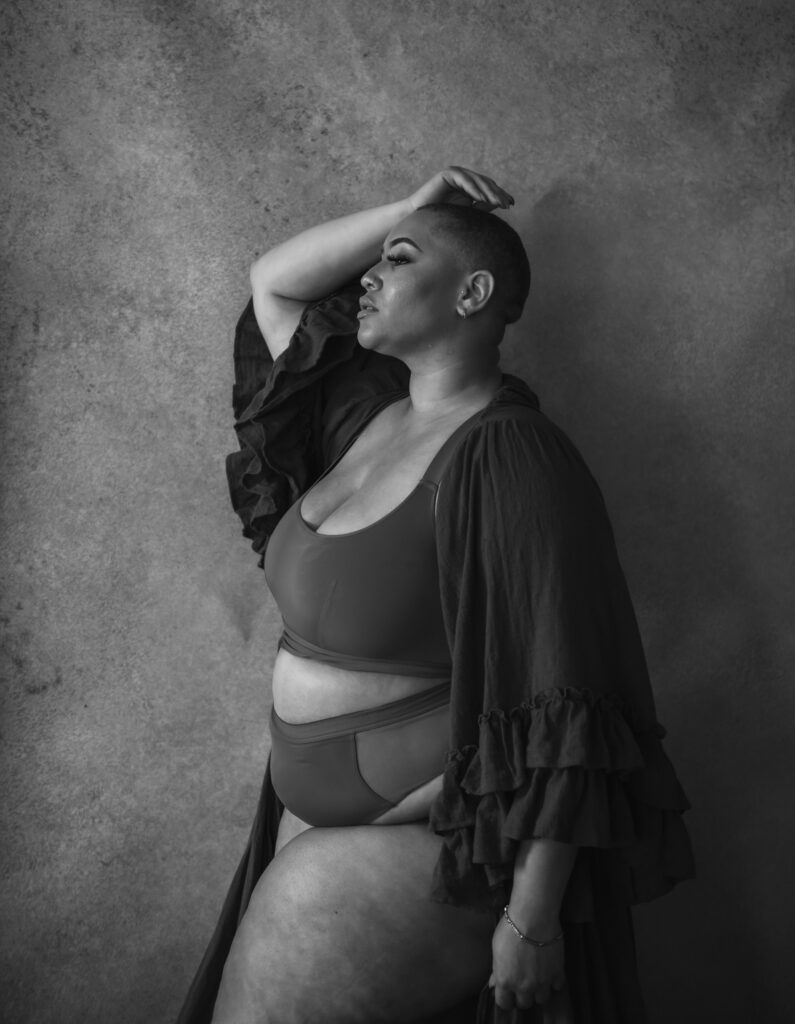
This is the part most photographers miss, and it’s exactly what I teach in my photography education →
What to do instead of memorizing poses
Instead of collecting 30 poses…
Start thinking in:
- movement
- emotion
- intention
Ask yourself:
What do I want this to feel like?
Soft?
Confident?
Distant?
Powerful?
Then guide your client into that.
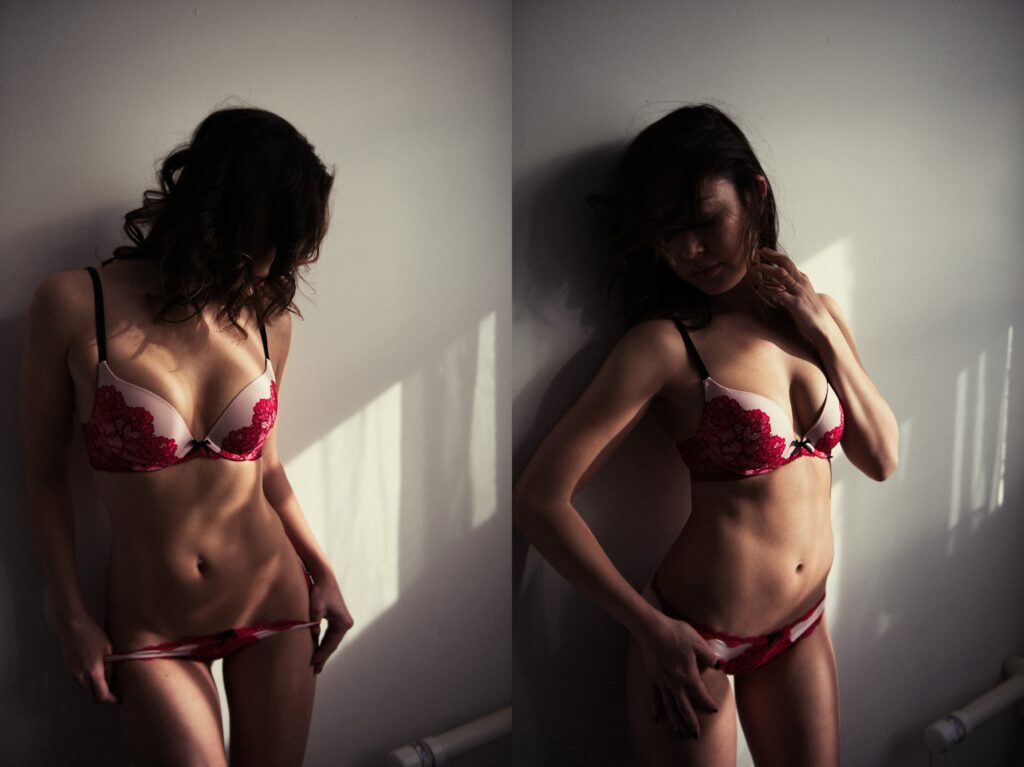
Real direction examples (this is where it clicks)
Instead of:
“Arch your back more”
Say:
“Stretch upward like someone just called your name… then slowly relax”
Instead of:
“Fix your hand placement”
Say:
“Let your hands move slowly across your body like you’re noticing it for the first time”
Instead of:
“Look at the camera”
Say:
“Look at me like you’re deciding if you trust me or not”
Now they’re not posing.
They’re experiencing something.
And that changes everything.
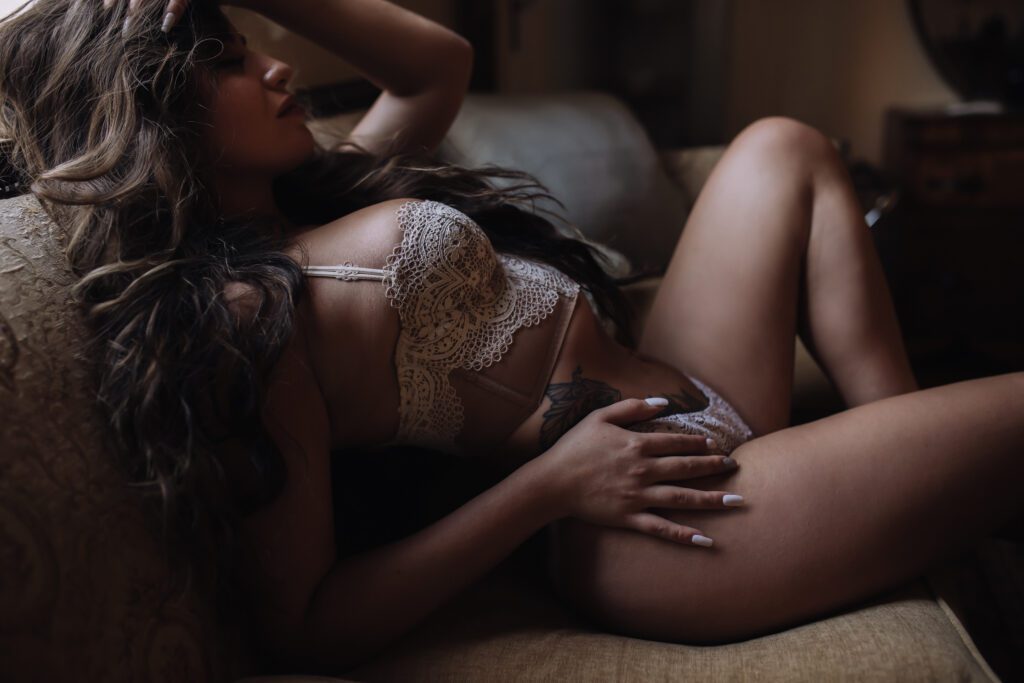
Boudoir posing tips that actually work
Most boudoir posing tips focus on positions, but that’s why so many images feel stiff. The real key is guiding your client through movement so the photo feels natural instead of forced.
How to pose any body type (without overthinking it)
This is where most photographers get stuck.
They think:
“I need different poses for different bodies.”
But that’s not actually true.
You don’t need more poses.
You need better direction.
Because when someone is:
- moving
- breathing
- reacting
Their body naturally finds better shapes.
More flattering angles.
More natural curves.
More softness.
Without forcing it.
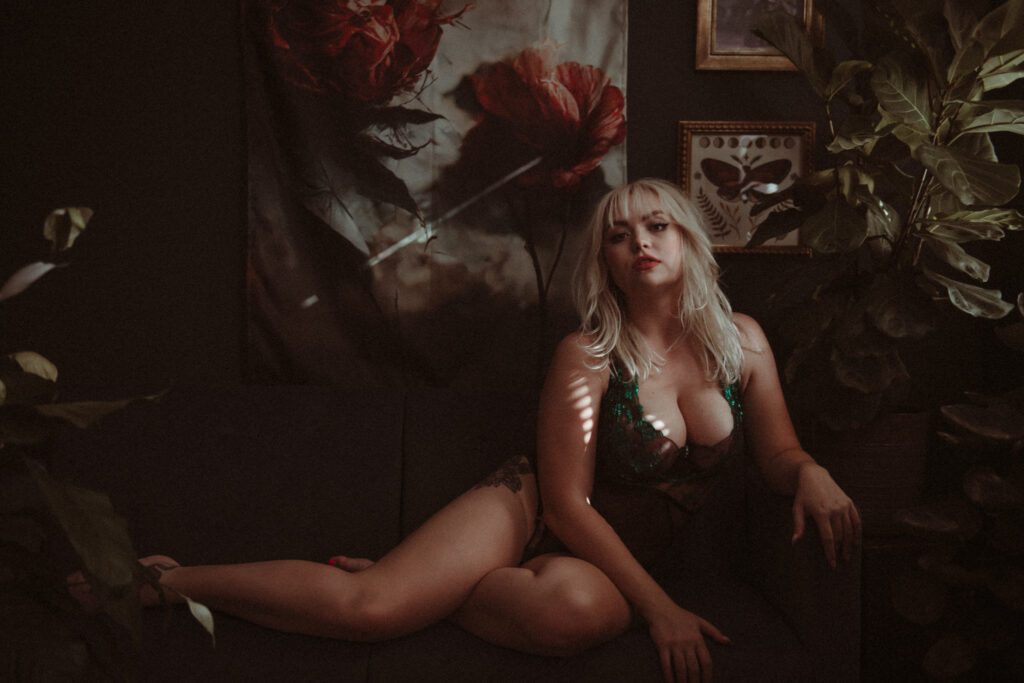
Why “natural boudoir posing” isn’t about looking natural
This is important.
Natural doesn’t mean:
standing still and relaxed.
Natural means:
believable
It means it feels like something real is happening.
A moment.
A thought.
A shift.
That’s what people connect to.
If you’re reading this and thinking…
“This is why my photos don’t feel right”
That’s because most boudoir education teaches poses…
Not how to actually guide someone into a moment.
Inside She Is Fire, I teach you exactly how to do this in a way that works on every client.
The biggest mistake in boudoir posing
Trying to control every detail.
The more you correct:
- hands
- chin
- shoulders
- expression
The more your client disconnects.
And that shows immediately.
What actually creates powerful boudoir images
It’s not the pose.
It’s this:
movement
emotion
trust
When your client feels:
safe
guided
not judged
They stop performing.
And that’s when your photos change.
A simple approach you can use right away
On your next shoot, try this:
- Pick one emotion
- Give one direction at a time
- Focus on movement, not positions
- Let them repeat it
- Don’t interrupt constantly
Let it unfold.
That’s where the image happens.
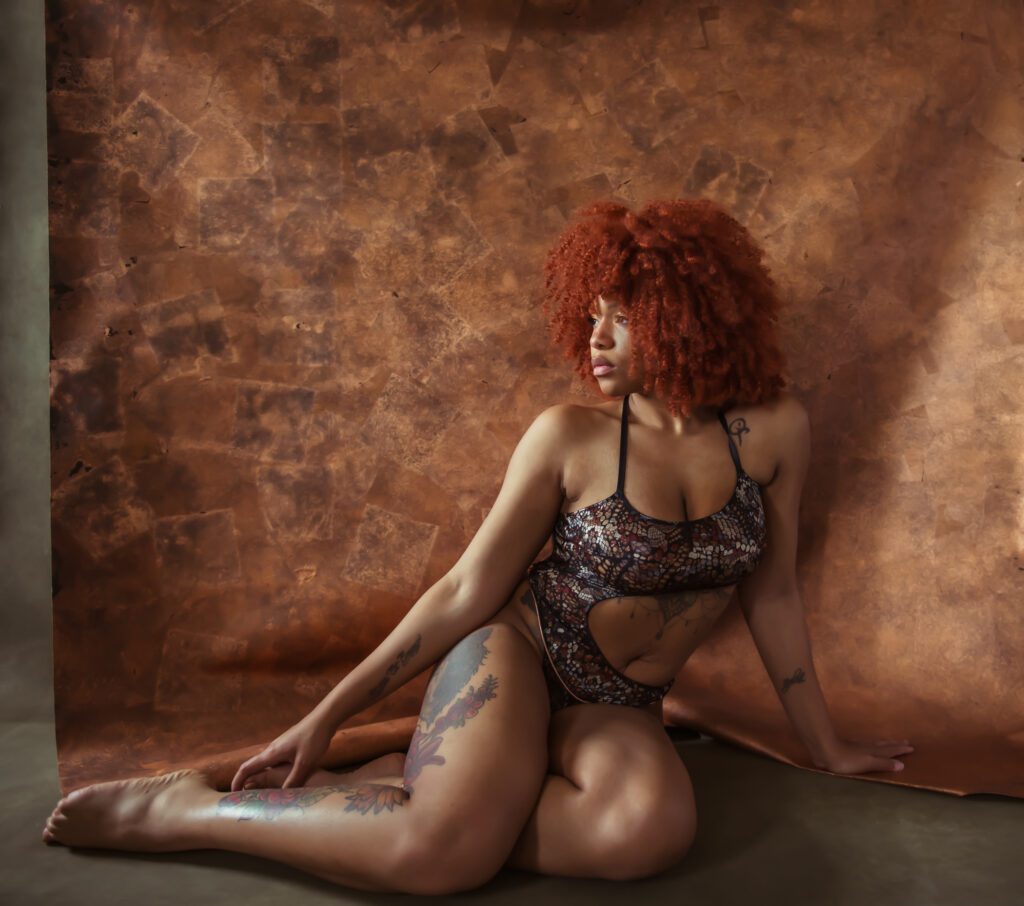
Why most boudoir posing guides don’t work
Because they give you:
results without process
And without process…
You’re stuck copying.
Instead of creating.
If you want your boudoir photos to feel different…
You don’t need more poses.
You need a different way of directing.
Once you understand that…
Everything changes.
If this clicked for you, then you already feel it…
There’s a better way to approach posing.
Inside She Is Fire, I teach you how to:
- guide instead of overcorrect
- create natural, emotional images
- and work with any client, not just confident ones
Because once you understand this…
You don’t need 30 poses.
You need a system that actually works.
→ If you’re ready for your photos to feel like something real…
Explore more photography education and posing guides here →
READ MORE :
Boudoir posing for beginners
If you’re new to boudoir photography, posing can feel overwhelming. But you don’t need dozens of poses. You need a simple way to guide your client so they feel comfortable and the images don’t look stiff. Check out Boudoir Posing for Beginners



Comments +